Showing posts with label kia. Show all posts

Tuesday, September 13, 2011

New 2012 Kia Soul


Completely refreshed, the latest Kia Soul being shown for the first time to a European audience at the Frankfurt Motorshow will offer consumers a more refined appearance, new powertrains, a higher specification, a more premium feel to the cabin and even greater potential for personalisation.

Styling improvements for the new model give Soul a wider, more stable appearance and more refined proportions thanks to an extended nose (by 15 mm) taking its overall length up to 4,120 mm. The front air intake is wider and larger fog lamps are also given a more prominent design. At the rear, the black bumper inset panel is extended, moving the fog lamps out towards the extremities of the car. As standard, new more powerful twin-bulb headlamps with black bezels and twin-bulb daylight running lights are fitted, while LED light clusters, front and rear, are standard on higher specification versions.


New style 18-inch alloy wheels and the 'pull' door handles enhance the Soul's profile, while redesigned exterior mirrors feature integrated LED side repeaters.

Inside, the cabin benefits from a revised centre console, circular-type LCD heater controls, a wider choice of new interior fabrics (Tartan Check, Houndstooth and Leather) and the availability of a Supervision (high definition) instrument cluster on certain versions. For greater durability key touch-points in the cabin are coated in a nano-layered, multi-metal paint. The steering wheel has both tilt and telescopic adjustment to ensure a comfortable driving position for all drivers.


A number of significant technical updates for refreshed Soul, include the introduction of a new 140ps 1.6-litre GDI Gamma gasoline engine and the continued availability of the popular 128ps 1.6-litre U2 CRDi diesel engine. The gasoline engine delivers 166 Nm of torque at 4,850 rpm, the diesel generates 260 Nm at just 1,900 rpm.

In most European markets, both engines will be offered with a choice of new six-speed manual or automatic transmissions - bringing the latest Soul's specification in line with the rest of Kia's modern product range.


Kia has sold more than 45,000 Soul cars in Europe since its launch in early 2009 and expects the refreshed model to continue to appeal to thousands of consumers as a popular, bold alternative to conventional B-segment vehicles when it goes on sale in October.


| Kia

New Kia Rio three-door


While the all-new Kia Rio five-door hatchback is generating positive media coverage around the world and arriving in dealer showrooms across Europe this month, Kia is celebrating the world premiere of its new Rio three-door model at the Frankfurt Motorshow.

Designed primarily for the European market, the new Rio three-door will expand the appeal of Kia's latest B-segment model to attract a new group of consumers to the brand for the first time - boosting conquest sales after its introduction during the first quarter of 2012. Ultimately, Kia expects the Rio three-door to account for approximately 20 to 25 per cent of total Rio sales.


Rio three-door has the same key dimensions as the five-door model (length 4,045 mm, width 1,720 mm, height 1,455 mm and wheelbase 2,570 mm) and retains the same roofline that is one of the lowest in Kia's European product range, emphasising its purposeful, sporty stance.

In most European markets, Rio three-door will be available with the same range of powertrains, equipment and options as the five-door. The new model will offer customers a choice of four highly efficient three- and four-cylinder engines - with a 75 to 109 ps power range.


The fastest Rio three-door will accelerate to 62 mph in 11.5 seconds and be able to reach a top speed of 114 mph. Fuel consumption will be as low as 88.2 mpg for the newly-introduced EcoDynamics diesel model, which will also deliver an industry-leading CO2 rating of just 85 g/km - the lowest emissions of any non electric vehicle, including hybrid vehicles.

With two bodystyles for new Rio, plus the already-popular five-door Soul and Venga B-segment models, Kia is confident of capturing an even larger share of the increasingly popular compact car market in Europe. The three-door Rio will go on sale from early 2012.


| Kia

Monday, September 12, 2011

Kia GT: the new rear-wheel drive concept car


Powerful, dynamic and forward-looking, Kia's new concept car signals the company's distinctive new design direction. This four-door sports sedan with a rear-wheel drive layout - a Kia first - marries sleek and muscular proportions with a sophisticated and elegant four-seater cockpit.

Although work on the Kia GT concept first started in November 2010, the idea of a powerful rear-wheel drive Kia saloon had been percolating in the minds of Kia's European designers for some time. "This concept allows us to explore exciting new design directions, as using a rear-drive layout creates very different proportions compared to a front-wheel drive car," says Peter Schreyer, Kia's Chief Design Officer. "The classic front-engined, rear-wheel drive layout of a performance saloon has distinct appeal not just for the domestic Korean audience, but also for the European and American markets."


"At the onset of this project," adds Gregory Guillaume, Kia's European Design Chief, "the design team was inspired by the spirit of iconic 1970s GT cars: sumptuous and elegant vehicles capable of whisking passengers from Paris to the South of France in effortless style and at high speed. We wanted to create something similarly graceful, athletic and confident, but not aggressive or overbearing."

This focus of dynamism and pace is sharpened by the car's aeronautical theme, headlined by the multi-piece propeller-style alloy and carbon-fibre wheels, the jet-themed rear-view cameras, the low-slung front air intake, the aerodynamically efficient rear diffuser and the winglets that curve in from the front flanks and flow into the headlamps.

This particular design motif draws inspiration from the seminal Kia Kee concept car, shown at the Frankfurt Motor Show in 2007. Indeed, Kia GT has a strong design lineage, with a number of central design elements that link it to last year's Pop concept and the Kee, ensuring a high degree of visual continuity despite their divergent styles and themes.

One of Schreyer and Guillaume's key goals was to ensure that the car's proportions couldn't be mistaken for anything other than a rear-wheel drive performance saloon. Hence the extended bonnet with the front wheels pushed right to the very front of the car, the cab-rearward stance, powerful rear shoulders and truncated rear end.


The Kia GT's silhouette accelerates away from the A-pillar towards the rear of the car, and this impression of athleticism is enhanced by the copper signature line that runs from the base of the A-pillar and along the roofline to end ahead of the base of the rear windscreen. And in a neat touch, the tick-shaped motif recalls the front quarter-light windows of the rakish GT cars that inspired the Kia design team.

The inspiration for the use of copper came after a visit by Kia's colour and trim team to the DMY International Design Festival Berlin - Germany's key event for contemporary and conceptual design - where this warm tactile metal was one of the stand-out materials of the show. The material's warmth is balanced by the coolness of the Kia GT's pale grey paintwork, with its mica flakes, that subtly captures nuances of light.

There's a tangible sense of strength and coherence to the Kia GT's flowing lines - from every angle it brims with intent and purpose, a vital element of Schreyer's approach to design. This impression of solidity is further reinforced by the way the roofline extends past the C-pillar to meet the rear screen, hunkering the car closer to the ground.

This powerful confidence is balanced by a raft of eye-catching details. The brake calipers are finished in copper, creating a neat visual link with the car's signature line. The contours of the castellated top of the windscreen flow into the roof, itself subtly bubbled to create further headroom for driver and front passenger. And the bonnet features a discreet power bulge and air intake, hinting at the car's performance potential.


Both Schreyer and Guillaume are particularly passionate about the Kia GT's lights. The alloy-framed central grille is flanked by complex headlamp units that each house a bank of six deeply recessed LED illuminators, to create a highly distinctive nocturnal signature. The advanced construction of the headlamps is mirrored by the single sweeping wing-shaped tail light that flows around the car's flanks and incorporates two sets of three upright stanchions.

The front doors and rear-hinged rear doors open outward at a slight upward angle, imbuing the car with what Schreyer describes as an air of grace and confidence. Despite its low stance, fast roofline and shallow glasshouse, the Kia GT's clean and uncluttered cabin architecture has created a spacious and airy interior with generous accommodation for the driver and three passengers.

The single-piece seats float on arched supports, further accentuating the cabin's spacious dimensions. The Kia design team deliberately chose to emphasise the proportions of the transmission tunnel to reinforce the power and performance of the saloon, but then balanced this muscularity by moving away from a button-laden centre console and creating a strongly driver-centric layout.

The glass instrument panel - similar to that first seen on last year's Pop concept car - features three layers of organic LEDs. These not only give it a three-dimensional depth but also allow a wealth of information to be displayed at the driver's command, freeing up the centre console from the usual proliferation of controls, buttons and displays. Fingertip controls mounted on the small, dished, three-spoke steering wheel allow the driver to select the desired data display.

This sophisticated instrument panel floats above the muscular centre console, further enhancing the cabin's sense of space. The large red starter button and twist-and-go transmission selector are combined in a single compact unit, further freeing up space on the central transmission tunnel. Playback from the cigar-shaped rear-view cameras is displayed on a pair of compact and thin LED screens mounted on the doors - perfectly positioned in the driver's line of sight.

The warm shades of copper used along the top of the glasshouse create a visual link with the buffed surface of the metallic-treated leather used throughout the cabin, and this russet cabin hue is enriched by the golden tint of the glasshouse.

The idea behind this leather surface treatment is simple - the areas with which the driver and passengers come into regular contact become buffed and smooth, creating a warm and welcoming patina to the cabin.

Schreyer believes this concept is less about design specifics and more about a general feeling of stance, proportion and balance - elements that will influence and guide his design team's approach to their next project.

"One of the great things about working on this project was that this is a very real car," says Schreyer. "It felt good to be working on a car that could roll down the road tomorrow. Yes, it would be a dream to put this into production - it has a logical layout, with four seats, and good luggage space, and it's also engaging and dynamic and makes a strong statement. It's exactly the kind of car Kia should be making."

Technical Details:
- Engine:
Lamda V6, 3.3-litre T-GDI [turbocharged, gasoline direct injection]
Transmission: 8-speed automatic
Max power: 395 PS
Max torque: 534 Nm

- Dimensions:
Length: 4690 mm
Width: 1890 mm
Height: 1380 mm
Wheelbase: 2860 mm

| Kia

Friday, August 19, 2011

Kia to unveil four-door sports sedan concept at Frankfurt Motor Show


Powerful, dynamic and forward-looking, Kia's new concept car signals the company's distinctive new design direction. This rear-wheel drive four-door sports sedan marries sleek and muscular proportions with a sophisticated and elegant four-seater cockpit.


"No matter from which perspective you look at it - this concept car is roaring with energy and ready for take-off," says Peter Schreyer, Kia Motors Chief Design Officer, proudly.


"I believe the car is a strong statement from Kia: we are ready to fast forward to an all new chapter."


| Kia | Images gallery

Thursday, August 18, 2011

All-new Kia Picanto, Rio and Optima granted ISO 14040 status


Kia Motors Corporation has been awarded three environmental certificates by TÜV Nord, an independent technical inspection organisation, in recognition of the strong eco-credentials of its three newest models.


The low tailpipe emissions of the new Kia Picanto, Rio and Optima, and the advanced manufacturing processes used in their production, resulted in all three models being certified according to the ISO 14040 Life Cycle Assessment (LCA).


The LCA inspection examines the environmental impact of both the car and its overall manufacturing process throughout the course of its lifetime, taking into account factors such as choice of materials, engine exhaust emissions and recycling.


Benny Oeyen, Vice President Marketing and Product Planning, commented: "Kia models continue to receive recognition from a wide range of independent industry organisations across the globe - for the quality and efficiency of their production methods, for achieving the highest levels of safety and for their striking design.


"Kia is deeply committed to minimising its vehicles' impact on the environment, and this latest honour follows similar accreditations for the striking new Sportage and for our state-of-the-art manufacturing facility in Zilina," concludes Oeyen.


All three of the Kia models accredited this month offer competitive running costs, and, in the case of the all-new Rio B-segment hatchback, the lowest CO2 output (from just 85 g/km) of any internal combustion engine car currently on sale in Europe - including Hybrids.


The new Picanto went on sale in the UK in June whilst the new Rio will go on sale from 1st September with the new D-segment Optima saloon following on in the latter part of the year.


Kia's manufacturing facility in Zilina, Slovakia was certified in 2008 as an 'environmentally-friendly' facility, earning an ISO 14001 International Certificate of Environmental Management. The plant employs cutting-edge technology to ensure that production and waste-management have a minimal impact on the environment. The Kia Sportage compact SUV, which is manufactured at Zilina as well as in Korea, was also awarded LCA status by TÜV Nord in 2010.


| Kia

Monday, August 15, 2011

Kia Picanto 3-door joins the range for the first time


Following on from the recent launch of the all-new Picanto city car Kia is introducing a three-door version to the line-up for the first time since the model appeared in 2004. The distinctively styled three-door version, with a new range of trim levels, will go on sale in the UK from 1st September.


The three-door Picanto has a unique, sporty character while still managing to deliver the same, seemingly contradictory, upgrades as the more family-focused five-door: stronger performance with lower fuel consumption and CO2 emissions, the safety and luxury features of a large car without an outrageous price tag, and practicality within a compact package. If the five-door Picanto is ‘the small car, grown up', then the three-door is the same but with a twinkle in its eye.


Why we've created the three-door

City-car sales - referred to as the A-segment in Europe - are increasing all over the world as the costs of buying and owning cars gets more prohibitive and many people are downsizing.


Globally, the market for Picanto-sized cars in 2014 will be around 2.4 million. By 2015 - well within the second-generation Picanto's life cycle - that will have grown to 3.3 million. Around a million of these will be three-door cars. Without a three-door model, Kia would have nothing to offer 30% of buyers in one of the most dynamic sectors of the market.


In the UK, the importance of the three-door car is even more pronounced: the sales split between body styles in the A-segment is a slender 55:45 in favour of five-door models.


Two unique cars from one central concept

The dimensions of the three- and five-door Picanto are identical in order to ensure they enjoy the same levels of interior space and crash safety. However, that simple statement does not do justice to the wealth of detailed work undertaken by Chief Design Officer Peter Schreyer and his creative teams to ensure the three-door has its own, unique character.


The changes are most obvious in profile, where new doors, rear panels and glass aft of the A-pillar give the three-door Picanto a fresh, dynamic appearance, accentuated by the rising belt line that slices through the door handle on each side, and the aerodynamically shaped side sill mouldings. Unique alloy wheels on the upper two trim versions are other distinguishing features of the three-door Picanto.


At the front and rear the three-door Picanto reveals its own personality, too. The main grille opening is larger than that on the five-door and is available with silver or red trim surrounds. The front bumper has been re-profiled to make the car appear wider and lower. It contains a slim, full-width lower grille, housing large black-bezelled foglamps with the two upper trim grades.


The rear bumper has a rectangular black central section in place of body colour, a relatively simple measure that makes the three-door Picanto instantly appear sportier. The finishing touch is created by exposed twin chromed exhaust outlets in place of the hidden single tailpipe of the five-door car.


Changes inside

The three-door Picanto is a practical small car with five seats and a big boot within an overall length of less than 3.6 metres, just like the five-door. And while its primary role might not be as a family runabout, Kia has done everything to make access to the back easy for those occasions when owners might want to give a lift to friends or relatives. Sliding and tilting front seats provide a wide ‘walk-in' to the split rear bench.


The three-door Picanto has its own colour schemes and trim structure that reflect its role as the sportier model in the range. The entry-level model - badged Picanto 1 or, with air conditioning, Picanto 1 Air - comes with all-black upholstery. Above that, the models are called Halo and Equinox rather than 2 and 3. Halo has premium black and grey interior trim, while Equinox is finished in premium ‘Chilli' red.


Depending on engine and trim combination, there is a choice of four exterior colours, and alloy wheels are standard on all but ‘1' and ‘1 Air' grade cars.


Efficiency across the range

The three-door Picanto offers brand-new 1.0- and 1.25-litre Kappa-family petrol engines, which deliver fuel economy of up to 67.3mpg with CO2 emissions as low as 99g/km. The larger engine is available with Kia's EcoDynamics fuel-saving technology - an Intelligent Stop & Go engine stop/start system - or, alternatively, with automatic transmission.


The three-cylinder 1.0-litre unit develops 68bhp and 95Nm of torque. The 1.25-litre four-cylinder engine is offered in three guises, all developing 84bhp and 121Nm of torque. In standard form it averages 60.1mpg. With a four-speed automatic transmission fuel consumption is an impressive 53.3mpg. Finally, there is the EcoDynamics version with fuel consumption at 65.7mpg.


The same new running gear developed for the five-door Picanto also appears on the three-door. It features MacPherson struts at the front and a coupled torsion beam axle at the rear, a layout which gives the best combination of ride and handling while minimising intrusions into passenger and luggage space.


The new set-up ensures the Picanto is stable in a straight linear speed and supple over typical British bumps. A stiff rear axle aids agility while also contributing to the car's impressive stability and comfort.


Four trim grades

Whilst the five-door Picanto follows Kia's simple trim naming structure of ‘1' for the entry model, ‘2' for the mid-spec and ‘3' for the top-of-the-range version a different approach has been taken with the three door.


Picanto three-door is offered in four trim specifications: 1, 1 Air, Halo and Equinox. The 1 and 1 Air carry over from the five-door and offer buyers a great value specification whilst the Halo and Equinox are new to the range.


Halo and Equinox are similar in concept to the popular ‘Originals Collection' versions of the Kia Soul, such as the Soul Echo, Burner and Searcher, and each offer a very high level of specification. By offering both entry level and characterful, more luxurious specifications Picanto three-door appeals to a broad customer audience within the growing A-segment.


Standard features on all versions include a trip computer, height-adjustable seat, a tilt-adjustable steering column and Motor Driven Power Steering. In-car entertainment is provided by a RDS radio and CD player with MP3 compatibility. Picanto 1, 1 Air, and Halo have four speakers and Picanto Equinox has six. Picanto Halo and Picanto Equinox also have USB and AUX ports, an iPod cable and steering wheel-mounted audio controls. On the outside body-coloured mirrors and bumpers and twin chromed exhaust outlets are all standard.


The Picanto 1 Air is for those customers who want air conditioning, and the fantastic value of the 1 specification, but without upgrading to the even more highly specified Halo or Equinox versions.


Whilst the Halo and Equinox versions have differing equipment levels they share certain items such as Bluetooth connectivity with voice recognition, automatic lights, LED front daytime running lights and LED rear lights, body-coloured side sill mouldings and a red front grille surround.


The Halo version adds to this with unique 14" alloys, heated front seats, heated steering wheel, reverse parking sensors, alloy pedals and a Supervision Cluster - Kia's comprehensive electronic instrument binnacle. Inside the black and grey upholstery is complemented with a high gloss white centre fascia and steering wheel arm, on the outside the Halo is finished in Lunar Glow metallic paint.


The Equinox spec changes the interior to premium red ‘Chilli' upholstery with a contrasting high gloss black fascia and gearknob. Distinctive 15" telephone-dial style alloy wheels lend a more sporting look to the exterior which is finished in Galaxy Black metallic paint. Automatic air conditioning and a smart key with a start/stop button are on top of the shared level of specification.


All versions have electronic stability control (ESC), anti-lock brakes (ABS), electronic brake-force distribution (EBD) to apportion stopping effort to the wheels with most traction, and emergency brake assist system (BAS), ensuring maximum stopping power regardless of the pressure applied to the pedal by the driver.


Should the worst happen every Picanto has front, side and curtain airbags to cushion heads and torsos against impacts from any angle. Front seat-belt pre-tensioners and load limiters brace occupants against a crash impact while reducing the risk of chest injury.


Picanto, in line with every other Kia, comes with the best warranty in the business - seven years or 100,000 miles on all non-wear and tear parts, including labour, subject to terms and conditions. The warranty is fully transferable to the next owner if the car is sold before the time or mileage limit expires.


| Kia | Images gallery

Tuesday, May 17, 2011

2011 Kia Optima car wallpapers and reviews

2011 Kia Optima car wallpapers and reviews
http://www.upcars.co.cc/2011/05/2010-enco-exclusive-audi-q7-30-tdi.html
2011 Kia Optima Front View2011 Kia Optima Best Sedan Car2011 Kia Optima Side View2011 Kia Optima Car Interior2011 Kia Optima First Look

Sunday, May 15, 2011

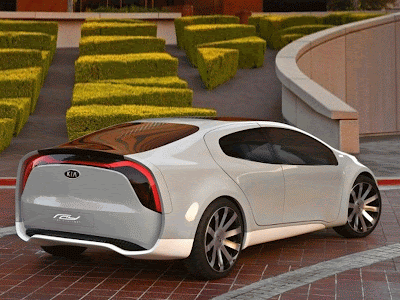
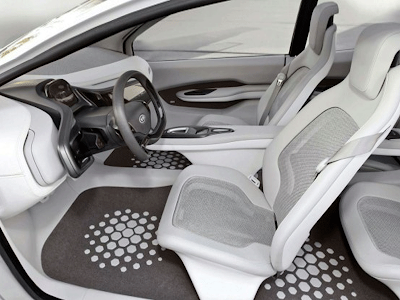
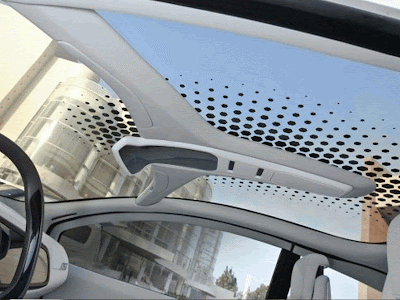
2010 Kia Ray Plug-in New Hybrid Concept wallpapers and preview with prices

2010 Kia Ray Plug-in New Hybrid Concept wallpapers and preview with prices
February 10, 2010 – Kia Motors America (KMA) today unveiled the Ray Plug-in Hybrid concept during a press conference at the 2010 Chicago Auto Show, advancing momentum of Kia Motors' global alternative fuel and powertrain research program, and its sub-brand coined 'EcoDynamics
Thursday, May 12, 2011

Un millón de motores Kia en la factoría de Zilina


A four-cylinder 1.4 litre petrol engine became the one millionth engine to be produced at Kia Motors Slovakia’s Zilina engine production facility – a mark reached within five years of the factory’s opening.

Built alongside the Zilina facility that produces cee’d Sportage and soon-to-be-added Venga, the KMS engine plant assembles finished units from components both manufactured on site and supplied by European partners including Nemak and ZF Zachs.


Petrol engines represent 60 per cent of the output with diesel units accounting for the rest of the 1,350 units per day production level. Currently the plant has a capacity of 300,000 units but following an expansion programme costing Euro 100 million that level will be increased to 450,000 per year on a three-shift basis.

"We are particularly proud to have produced one million engines within less than five years since the volume production was launched,” said Myung-Chul Chung, President and CEO of Kia Motors Slovakia. “And our expansion plan will allow us to become one of the biggest automotive engine manufacturing sites in Central Europe.”

The Kia Motors Slovakia engine plant produces 1.4-litre and 1.6-litre petrol and 1.4, 1.6 and 1.7-litre diesel engines and the car plant has already built more than 820,000 vehicles since it opened in 2006.

| Kia

Wednesday, May 11, 2011

Monday, May 9, 2011

2009 Kia Sportage Review features reviews and wallpapers

2009 Kia Sportage Review features reviews and wallpapers
Kia further emphasizes design while integrating exceptional value and quality, the award-winning Sportage receives a face lift for 2009. In its second generation, Sportage features a fresh, new exterior look and new contemporary technological features on the interior.

2009 Kia Sportage Images
Related Posts Plugin for WordPress, Blogger...