Showing posts with label bmw. Show all posts

Tuesday, September 20, 2011

The BMW Group Classic at the Goodwood Revival 2011


Virtually no other historical motor-sport event transports visitors back to the flair and glamour of yesteryear as stylishly as the Goodwood Revival. The successful racing history of MINI and BMW makes the Goodwood Revival the focal point for presenting some fascinating vehicles taken from the illustrious past of both brands. “For BMW Group Classic, the Goodwood Revival is one of the highpoints in the classic calendar,” enthuses Karl Baumer, Director of BMW Group Classic, about the weekend in the South of England.

This year, two vehicles from Munich will compete for the St. Mary’s Trophy. A very new scion from the motor-sport collection will line up at the start for MINI. Since the beginning of this year, an Austin Mini Cooper S Competition from 1964 has been completely rebuilt in the workshop of the motor-sport division at BMW Group Classic. “We want to remind everyone that MINI also brought home numerous victories on racing tracks alongside its outstanding successes in rally racing,” explains Friedrich Nohl, Head of the Motor-sport Division at BMW Group Classic, commenting on the motivation for the restoration project.


Manufacture of the racing versions of the Mini-Cooper S powered by a 1275 cc engine commenced in 1964. John Fitzpatrick won the 1300 cc class and took second place in the British Touring Car Championship. John Rhodes dominated the 1300 cc class in this championship from 1965 to 1968. He also drove this car to victory in the European Championship in 1968. The car competed in Group 2 and normally had a displacement enlarged to 1293 cc. “We thought that Goodwood was the ideal venue to showcase this British success story with a view to driving the Cooper S in the first race,” continued Nohl. The classic Mini will be driven by Claudia Huertgen, successful racing driver and chief instructor at BMW and MINI Driving Experience, and by Jörg Weidinger, who comes from the hillclimb scene and has been working as a driver trainer at BMW and MINI Driving Experience for many years.

A BMW 1800 TISA is lining up on the starting grid for BMW in the St. Mary’s Trophy in celebration of its landmark 50th anniversary. We were able to attract two very special drivers for this event. Touring Car World Champion Andy Priaux will take the wheel in the fastest of all the models in the New Class. Herbert Diess, Member of the Board of Management of the BMW Group and responsible for the purchasing portfolio, completes the team. The car driven by this celebrity team comes from the motor-sport collection of BMW Group Classic and competed in circuit and hillclimb races in 1965 and 1966. In 1992, Dieter Quester claimed victory driving this car in the European Championship for Historic Touring Cars.


The 1800 TI/SA – “SA” stands for “Sonderausführung” “or special version” – enabled BMW to market a car especially designed for club sport from 1965. The 1800 TI/SA was fitted with two twin carburettors. The compression in the engine was increased compared with the BMW 1800 TI and the engine generated 130 hp, transforming the fast family saloon into a serious contender as a touring car for motor-sport competitions. The purchaser also benefitted from sporty equipment, such as a five-speed gearbox, wooden steering wheel and adjustable bucket seats. A tank holding 105 litres of fuel, adjustable shock absorbers and a range of final drive ratios could also be added as optional extras. Its dependability ensured that this fast BMW four-door car achieved many international successes. Only 200 BMW TI/SA saloons were built. Today, the cars are highly sought after as particularly rare.

BMW Group Classic is not just showing gems from its collection on the race track. Some of its treasures are also on show in the three historic garages located on the exhibition campus beside the racing circuit. An Isetta from BMW relives the era of the 1950s.


MINI is featuring the motto ‘Swinging London’ while Rolls-Royce is showing a design studio focusing on the Spirit of Ecstasy that has been the emblem adorning the cars manufactured by Rolls-Royce for the past 100 years.

The new BMW M5 is being exhibited at the Earls Court Motor Show at the Goodwood Revival alongside its namesake from the 1980s. The past and present of the BMW tradition of turbocharged engines is also on show: a brand new BMW 118i and also a BMW 2002 turbo, the first European series car with an exhaust turbocharger.


| BMW

Friday, September 16, 2011

The BMW 3 Series: an unparalleled career in motorsports


Over the 5 generations since its launch, the BMW 3 Series has enjoyed a most impressive career. This applies to its market success, but also especially to its career in motorsports. During the past 35 years, the 3 Series models with their characteristic compact dimensions, dynamic engines and sporty suspension have contributed considerably towards dynamic performance and the brand’s excellent reputation on the racetrack.

With such attributes, BMW’s midrange model is ideally suited for successful use in motorsports in particular. With its return in 2012 to the DTM, a top motorsport category, BMW intends to replicate its earlier successes with the BMW M3 DTM now currently under development.


A start with a bang: BMW 320i for the BMW Junior Team.
The BMW 3 Series Sedan of the first generation had been on the market for just two years when it caused an incredible sensation on the racetrack. The task was to render the new series a flagship of the brand in terms of sportiness through its successful deployment in motor sports. The BMW Motorsport GmbH, which was established in 1972, developed the BMW 3 Series with the greatest consistency into a so-called Group 5 racing touring car in accordance with an extremely sophisticated technical regulation. The car was powered by a proven racing engine – the 2-litre four-cylinder power unit with four valves per cylinder, which had dominated Formula 2 racing for several years and already boasted 300 hp when first deployed in the BMW 3 racing car. Trimmed for good road holding by means of lightweight construction, torsional stiffness and huge wings at the front and rear, the three exclusively painted cars for the BMW Junior Team (comprising young talents Manfred Winkelhock, Marc Surer and Eddie Cheever) were the main topic of discussion during their first race at the Belgian Grand Prix racetrack in Zolder on 13 March 1977. But when one of the three BMW juniors, Marc Surer from Switzerland, went ahead of the established competition, eventually going on to win the race, the sensation was perfect. The BMW 3 Series had got off to a storybook start on the racetrack.

During this first season and in the following years, the path to victory in its class always led via the BMW 3 Series racing touring car. It was deployed in countless national championships and at the end of the season the champion in those days was usually a BMW driver. Time after time, leading racing drivers such as Hans-Joachim Stuck or Ronnie Peterson demonstrated their extraordinary talents in this racing car. 3 Series cars in the Group 5 were also successfully deployed in the Manufacturer World Championship.

In 1978, the German Racing Championship was won by a turbo version deployed by the Team Schnitzer from Freilassing. Incidentally, it was a 1.4-litre, 410 hp BMW works car also featuring this technology that encouraged advocates of an idea how to accomplish even greater deeds: The engine of this BMW 3 Series was, so to speak, the predecessor to the power unit with which, in 1983, the Brazilian Nelson Piquet became the first ‘turbo world champion’ in Formula 1 racing history driving a Brabham BMW. The spectacular chapter of Group 5 racing cars drew to a close in 1982, but the next chapter in the history of BMW 3 Series motorsport had already been opened.


BMW M3: the world’s most successful touring car.
In addition to the convertible, touring, compact, diesel and four-wheel drive versions and simultaneously with the expansion of the second generation of the BMW 3 Series starting in 1982, a further very special variant stepped into the public and racing limelight – the BMW M3. Then, in 1987, nobody could anticipate that this 3 Series would one day become the world’s most successful touring car. The idea was to create a basic car that contained all that was needed to develop a potentially successful racing car according to the so-called Group A regulation. And in compliance with the rules in force, 5,000 of them had to be built within a year. The central issue was yet again the engine. Here, the BMW Motorsport GmbH reverted to a trick they had already used in the past. A great in-line six-cylinder engine featuring four-valve technology was available from the BMW M1 and the BMW M 635 CSi. This was, in simple terms, ‘shortened’ by two cylinders. The final result was a 2.3-litre four-cylinder engine, whose initial 200 hp had already catapulted the series production BMW M3 into the sports car sector. In 1987, following a victorious interim period with the BMW 323i, the 300 hp racing version of the BMW M3 took to the starting grid for the first time and went on to win everything that could be won in touring car sports. In the years 1987 to 1992, hardly a racing weekend went by without Munich receiving a report of a BMW M3 victory or a championship win in a country somewhere in the world. Whether in Australia, Finland, France or Holland and Germany, M3 drivers were gaining championship titles everywhere, which even included victory in a rally sport world championship event. In the hotly contested DTM (Deutsche Tourenwagen Meisterschaft) alone, the M3 seized 40 victories and more than 150 top three rankings.

A special mention should be given to the World and European Championship titles, as well as the hard-fought victories in the 24-hour race at the Nürburgring-Nordschleife and in Spa-Francorchamps / Belgium. In short, the racing battles fought by drivers Roberto Ravaglia, Johnny Cecotto, Steve Soper, Emanuele Pirro or Joachim Winkelhock (to name just the wildest), are among the classics in motorsport – and include some of the 3 Series’ greatest sporting moments.


On the way to success with four and six-cylinder engines and with diesel.
The sporting career of the third-generation 3 Series was characterised by deployment in various countries and championships, some of which were subject to very differing technical regulations. For example, from 1993 to 1998 vehicles featuring varying modifications and engines were put on the starting grid. The choice of racing cars ranged from the BMW Coupe and Sedan with an almost production-ready body and a 2-litre four-cylinder, four-valve engine with around 300 hp to an extensively modified version of the BMW M3. BMW 3 Series cars stood out impressively from the competition wherever they competed. Victories in Germany – in the STW Cup, in England or Italy were everyday occurrences as were the successes in Asia, Australia and South America. However, all of this was outdone by a result in an event that has been a BMW domain for some time now – the long distance race. During the 24-hour race at the Nürburgring in 1998, a BMW 320d with a 200 hp turbo diesel engine achieved the rare feat of crossing the finishing line as overall winner.


The chase for victory in the World and European Touring Car Championships.
Also in the case of the fourth generation of the BMW 3 Series, the four-door sedan once again served as the basis for the racing versions designed to participate in touring and long distance events. In addition to many national championships, the European Touring Car Championship and, later, the World Championship were BMW’s main focus of interest. Since 1999, the BMW Motorsport GmbH had been developing the BMW 320i powered by a four-valve in-line six-cylinder engine, initially with approximately 200 (later more than 250) horsepower – a racing car that was to become a guarantee for success. 3 Series racing cars regularly supplied the Munich sports department with best driver and manufacturer rankings. 2005 saw a highlight of those years, with BMW winning the newly established World Touring Car Championship with the BMW 320i, the triumph being completed by Andy Priaulx, after BMW’s Roberto Ravaglia the second World Touring Car champion in the history of motorsports. The second “weapon” based on the fourth generation of the BMW 3 Series was the BMW M3 GTR. BMW was highly successful with this high-carat racing car in long-distance races (including double victories in 2004 and 2005 in the 24-hour race at the Nürburgring), as well as in the American Le Mans Series.


The future has already begun.
As in previous years, the latest and meanwhile fifth generation of the BMW 3 Series focused on the sedan and the BMW M3. Again, the schedule comprised the major touring car championships and long-distance races. The BMW 320si now featured a four-cylinder engine and for the international and national 24-hour classics BMW came up with something really big: The sporting achievements for the racing cars of this generation include the triumphs in the 24-hour race with the immensely powerful and extremely reliable BMW M3 GT2. Highlight: Overall winner of the Eifel Classic 2010, in which well over 200 competitors took part. Further sporting highlights: World Championship title in 2006 and 2007, second place at the Nürburgring in 2011, third place in the 24-hour race at Le Mans and the 2010 manufacturer’s title in the ALMS.

And the BMW 3 Series’ future in big-time motorsports has already begun: From 2012, BMW will return to the German Touring Car Championship with three teams and the BMW M3 DTM. In mid July, the BMW M3 DTM Concept Car was presented in Munich to the world press. Technical data: CFRP monocoque construction with steel rollover structure, naturally aspirated 4-litre V8 engine with a maximum power output limited to 480 hp by means of an air restrictor. Acceleration from 0 to 100 km/h in around 3 seconds, top speed approximately 300 km/h. The first BMW works drivers have also been selected: multiple World Touring Car Champion Andy Priaulx (GB) and shooting star Augusto Farfus (BR).

| BMW

Tuesday, September 13, 2011

BMW Motorrad Concept E. Design concept for a BMW electro-scooter


Individual mobility is increasingly defined in terms of sustainability. The BMW Group has taken on the challenges of a rapidly changing world and is now developing serial production solutions to meet the mobility needs of the future. As an integrated part of the BMW Group, BMW Motorrad is also addressing issues of individual single-track mobility and future customer needs. In this connection, BMW Motorrad is expanding its business activities to include a new facet: that of "Urban Mobility".

Building on almost 90 years of experienced in the field of motorised two-wheel vehicles, BMW Motorrad is drawing on the conceptual benefits of single-track vehicles to develop innovative solutions, adding a new dimension to the area of urban commuting.


Before the end of this year, BMW Motorrad will establish its new
"Urban Mobility" area with two premium vehicles in the maxi scooter segment. The BMW maxi scooters combine the functionality of a scooter with the riding pleasure of a motorcycle. Both vehicles are powered by high-performance and efficient 2-cylinder combustion engines.

Based on the BMW Group's sustainability strategy, BMW Motorrad aims to put a premium offer on the market in the area of electromobility in the foreseeable future. At the Frankfurt International Motor Show (IAA), BMW will be presenting its design concept in this area for the first time: "BMW Concept e".

Visionary design for a new drive concept.
The design study BMW Concept e embodies the vision of an electrically powered scooter made by BMW Motorrad. Increasing limitations in traffic space, growing traffic density as well as both ecological and economical challenges give rise to new demands in the area of private transport in the major conurbation areas in particular. An e-scooter with sustainable technological solutions and the aesthetic design of the Concept e provides a response to these changing urban mobility needs.

At the IAA in Frankfurt, BMW i presents visionary vehicles which are individually tailored to their respective purpose - the BMW i3 Concept and the BMW i8 Concept. They have a completely new "LifeDrive Architecture" specially developed for electrical drive and radically different from conventional vehicle construction. With its fascinating overall concept, the BMW i8 Concept with plug-in hybrid drive is the vision of a sustainable sports car come true. The BMW i3 Concept is the automobile with consistently sustainable design, conceived specifically for an urban setting.

With its Concept e, BMW Motorrad shows how attractive and fascinating the interpretation of the theme of electrical drive on two wheels can be in terms of design, while at the same time attracting attention to its new business area "Urban Mobility".

Concept e - a vision with a future.
The Concept e is a vision: BMW Motorrad designers have developed the style and shaping of the e-scooter of the future - electric, digital, dynamic. The designers deliberately allowed themselves plenty of freedom so as to be able to strike out new, creative paths in the design of components and surfaces.

The shaping and precision achieved reflect the core values of BMW Motorrad: emotion, dynamic performance and innovation. At the same time, the purist, clear design, colouring and choice of materials instantly suggest a clean, efficient yet agile single-track vehicle which allows one to move effortlessly through city traffic.

So the design concept study Concept e is more than just an idea for a new vehicle. In addition to technical functionality and quality, the BMW Motorrad designers attach importance to an emotional dialogue between rider and vehicle. Their basic premise is that a vehicle has to do more than just function - it has to arouse the rider's emotions, too. It has to inspire the rider again and again, as well as reflect its specific technological features.

So in the case of the Concept e, the main aim was to translate the special character of electric drive technology to the vehicle's outward appearance.

The Concept e is the conceptual blueprint of a scooter able to set new standards with innovative premium electrical drive and provide a sound alternative form of mobility suitable for everyday use in the dense traffic of the constantly expanding conurbation areas and cities of the world today.


Concept e: una visión con buenas perspectivas de futuro.
Hallmark BMW Motorrad design elements.
The BMW Concept e is clearly identifiable as a member of the
BMW Motorrad family. As in other BMW motorcycles, the so-called split face runs from the upper trim section to above the front wheel cover, giving the Concept e an unmistakable, dynamic front view.

The successful BMW Motorrad design style is also reflected in the styling of the twin-tipped spoiler in the floating panel of the front trim, a boomerang-shaped, aerodynamically formed floating panel. The short, sporty rear highlights the active riding character of the electrically powered scooter, giving it a visual sense of dynamic performance which is underscored by the low cut windshield.

Colour and material concept blends in with overall concept.
The dynamic performance, fascination and especially the environmental compatibility of electrical mobility is reflected in the colour and material concept. The front and rear side trim sections finished in “Light white” generate a fascinating contrast with components such as the upper trim section in “Black chrome light” and side sills coated in “Black chrome dark”, thereby emphasising the scooter's technological features. The vehicle's overall impression of high quality is borne out by finely cut details in “Natural aluminium”, the asymmetrically designed, solid-milled holder for the front trim section and the central tunnel in “Textured steel”. The design of the light alloy wheels is derived from the styling of the BMW i automobiles.

Made from acrylic glass and featuring a rear-set metal grid and "Concept e" lettering, the two side covers of the battery and drive unit in “Electric yellow” symbolise the technical character of an electrically powered scooter. In combination with other accentuations in “Electric yellow” such as the front trim section, the rear section and the hollow-bore wheel axle, these stand for the vehicle's specific properties of maximum environmental compatibility, supreme dynamic performance and easy handling. To match this, the charging socket is positioned in the front section of the central tunnel and features a transparent plastic cover.

The Concept e highlights its visionary character by dispensing with conventional rear mirrors. Instead there are two video cameras integrated in the glass of the rear light cluster which clearly displays the situation on the road behind the rider on two LCD monitors installed in the cockpit. Speed and other relevant data is shown on a digital display in the cockpit which is reduced to the essentials.


Innovative technology in a future serial production vehicle.
The later serial production vehicle will fully meet customer expectations of a single-track vehicle offering sustainable mobility. The special arrangement of all drive components and the design of the vehicle's geometry will allow agile handling typical of a scooter as well as a high degree of functionality.

For the power electronics and battery technology, BMW Motorrad draws on the innovative e-technology and extensive expertise of the BMW Group.

BMW i high voltage technology (> 60 volts) with the very highest safety standards enables electrically powered vehicles to equal the acceleration rates of a maxi scooter with combustion engine. The generous storage capacity of the battery, an intelligent battery management system and efficient brake energy recuperation ensure a realistic range of 100 kilometres for everyday use. What is more, BMW Motorrad developers are aiming to achieve a continuous output and maximum speed which will enable safe overtaking on urban motorways when carrying a passenger.

The battery is charged at regular household power sockets as found in Europe, the USA, Canada and Japan, There is no need for a special charging station. When the battery is completely flat, the charging period is less than three hours. Practical experience with concept vehicles has already shown that the battery rarely runs out completely, so charging times are generally shorter.

In this way, the future serial production vehicle will provide a long-term, zero-emissions city travel option which is suitable for everyday use.


| BMW | Images gallery

Monday, September 12, 2011

BMW develops ‘Origin’ film season with Picturehouse Cinemas


To celebrate the launch of the new BMW 1 Series, BMW has teamed up with Picturehouse Cinemas to launch the ‘Origins Film Season’. The film season starting on 19 September, 2011 has been introduced in conjunction with the advertising campaign that uses the ‘Origins’ theme to underscore the variety of model variants in the new 1 Series.

Just as the new BMW 1 Series Sport and Urban models embody different interpretations of one classic design, the film’s curator Mark Kermode has chosen four pairs of films which explore a single unifying theme in distinct ways. The theme ‘A Life of Crime’ is explored with screenings of the classic gangster movie ‘Goodfellas’ and Jean-François Richet’s ‘Mesrine: Killer Instinct’ – two films about men seduced by the mythology of crime. Other themes including ‘Rites of Passage’ and ‘Tricks of the Mind’ are personified with films such as ‘Y Tu Mama Tambien’, ‘The Graduate’, ‘Memento’, ‘Adaptation’, ‘A Clockwork Orange’ and ‘Quadrophenia’.


Film critic Mark Kermode has chosen some of the highlights of the past forty years of film, and each screening will be accompanied by a filmed introduction by Kermode. BMW has had a long association with the big screen from appearing in James Bond films through to supporting art house pictures from fledgling directors and film producers.

| BMW

Thursday, September 1, 2011

BMW develops laser light for the car


Following the introduction of the full LED headlight, laser light is the next logical step in the development of vehicle headlight technology. BMW is planning this step, thus further expanding its lead in innovative light technology.


As a globally successful carmaker within the premium segment, the BMW Group attaches the utmost importance to advanced technology in all sectors of automotive manufacturing. Exclusive innovations and technological leaps secure BMW’s lead amongst the competition. In the field of exterior vehicle lights, BMW also leads the way for example with full LED headlamps for the BMW 6 Series and with new developments such as the “Anti-dazzle High- Beam Assistant”, as well as with “Dynamic Light Spot”. The term “Dynamic Light Spot” stands for a marker light system that automatically illuminates pedestrians in good time, thereby guiding the driver’s attention.


After LED technology, laser light is the next logical step in car light development. BMW engineers are currently already working on the introduction of laser light as a further pioneering technology for series production within a few years. Laser light could then facilitate entirely new light functions for even more safety and comfort and at the same time contribute significantly through its higher degree of efficiency towards a saving in energy and fuel respectively.


Laser light produces virtually parallel light beams.

By definition, laser lighting is radically different from sunlight, and also from the various types of artificial lighting in common use today. For a start, laser lighting is monochromatic, which means that the light waves all have the same length. And it is also what is known as a “coherent” light source, which means that its waves have a constant phase difference. As a result, laser lighting can produce a near-parallel beam with an intensity a thousand times greater than that of conventional LEDs. In vehicle headlights, these characteristics can be used to implement entirely new functions. Also, the high inherent efficiency of laser lighting means that laser headlights have less than half the energy consumption of LED headlights. Simply put, laser headlights save fuel.


The intensity of laser light poses no possible risks to humans, animals or wildlife when used in car lighting. Amongst other things, this is because the light is not emitted directly, but is first converted into a form that is suitable for use in road traffic. The resulting light is very bright and white. It is also very pleasant to the eye and has a very low energy consumption.


Laser diodes are already in use today in the consumer sector.

Completely safe laser lighting technology is already in use in a variety of consumer products, though in many cases this is a product feature that goes unnoticed by the customer. That won’t be the case when this technology is used in cars, however, as planned by BMW. Here the whole point is that the advantages should be noticeable and visible. A further feature of laser technology, which has important implications, is the size of the individual diodes. With a length of just ten microns (µm), laser diodes are one hundred times smaller even than the small, square-shaped cells used in conventional LED lighting, which have a side length of one millimetre. This opens up all sorts of new possibilities when integrating the light source into the vehicle. The BMW engineers have no plans to radically reduce the size of the headlights however, although that would be theoretically possible. Instead, the thinking is that the headlights would retain their conventional surface area dimensions and so continue to play an important role in the styling of a BMW, while the size advantages could be used to reduce the depth of the headlight unit, and so open up new possibilities for headlight positioning and body styling.


A further advantage of laser lighting technology, and one which the BMW engineers intend to use to full effect, is its high inherent efficiency. A single statistic will make this clear: whereas LED lighting generates only around 100 lumens (a photometric unit of light output) per watt, laser lighting generates approximately 170 lumens. With statistics like this, it is not surprising that BMW is also planning to take advantage of laser lighting technology to increase the efficiency of the overall vehicle. And appropriately enough it is in a concept vehicle from the new BMW i sub-brand, the BMW i8 Concept, that laser lighting will get its first airing. After all, BMW i stands for a new premium concept that is strongly oriented towards sustainability.


Laser lighting: high efficiency and safety.

Safety is a key consideration in the development of laser lighting for use in passenger cars. For BMW, the complete eye safety of this technology for all road users and its complete reliability in day-to-day use have top priority. Importantly, therefore, before the light from the tiny laser diodes is emitted onto the road, the originally bluish laser light beam is first of all converted by means of a fluorescent phosphor material inside the headlight into a pure white light which is very bright and pleasant to the eye. As a result, in future it will be possible to use laser light to implement all the familiar – including more recent – BMW lighting functions such as Adaptive Headlights, the “Dynamic Light Spot” spotlighting system and the “Anti-Dazzle High-Beam Assist”. It will also be possible to use BMW laser lighting to implement completely new functions, which will have only minimal power consumption.


| BMW

Wednesday, August 31, 2011

Prime Minister Cameron: MINI is a great success story


Today, ten years after the start of MINI production in Oxford, British Prime Minister David Cameron drove the two-millionth MINI out of the plant. The car is a MINI Convertible with special paintwork and extras.


Frank-Peter Arndt, member of the Board of Management of BMW AG, responsible for Production, said in Oxford: “Production of the two millionth MINI comes on the back of strong demand worldwide. Our recent announcement of an additional £500 million investment in our UK MINI production facilities demonstrates the important role that Oxford plays in our global production network. The most essential factors in the success of MINI are the skills, passion and dedication of our associates.”


On the occasion of the British Prime Minister’s visit to Plant Oxford, Arndt outlined the company’s plans for its UK operations. The majority of the investment will be used for new production facilities for the next-generation MINI, and will play an important part in securing the long-term future of Plant Oxford and safeguarding jobs at the pressings plant in Swindon and the company’s engine plant in Hams Hall near Birmingham. This takes the BMW Group’s investment across all its UK operations to more than 1.5 billion pounds since 2000.


Cameron declared: “It’s a real privilege to drive this true British icon off the production line today. The 2 millionth MINI to be made here in Oxford is a fantastic symbol of the UK’s strength in the global automotive industry and a great British manufacturing success story. MINI is not just a symbol of our industrial past, but also the great industrial future we want to build.”


The special-anniversary MINI is the prize in a global Facebook campaign “2 Million MINI – 2 Million Faces” which will compile the faces of two million MINI fans on a special Facebook “wall”. The winner will be chosen at random when the contest ends on 30 September.


Jürgen Hedrig, head of Plant Oxford said: “This marks a tremendous milestone for Plant Oxford and its employees. Oxford has been the heart of MINI production for ten years. Our employees are proud to be part of this brand’s success.” The premium small car is delivered to customers in more than 90 countries across the globe.


Producing 216,302 vehicles in 2010 and exporting to more than 90 countries across the globe, MINI was the third-largest vehicle manufacturer in the UK, accounting for 17 per cent of national automotive production. Plant Oxford currently builds four MINI models: the MINI, MINI Convertible, MINI Clubman and the new MINI Coupé. A fifth model, the MINI Roadster, will be added at the end of the year.


The success of the MINI brand can be seen in the positive developments at the Plant Oxford since 2001. Back then, a single shift of around 2,400 employees produced about 300 cars a day. Today, a team of more than 3,700 works two shifts, five days a week, and builds up to 900 cars a day. Over the past ten years, the maximum capacity of the plant has increased from 100,000 units per year to more than 200,000 units. Over the medium term, the plant will reach an annual capacity of 260,000 units.


BMW Group’s contribution to the UK economy

The UK is the BMW Group’s fourth-largest single market worldwide for sales, behind only Germany, the US and China, with sales in 2010 across the BMW, MINI and Rolls-Royce brands totalling 154,750 vehicles.


Rolls-Royce models have been built in the UK for 107 years. The company has continually invested in the Goodwood facility in West Sussex since the company was re-launched in 2003, and will continue to do so in response to the growth of the brand.


The BMW Hams Hall engine plant set a new annual production record in 2010 of 385,051 engines, representing 16 per cent of total UK engine production.


A report published by Oxford Economics underscores the significance of the BMW Group to the UK economy. The company and its dealer network employ around 18,000 people directly, while its supplier and service network supports over 46,000 jobs in total in the UK.


80 per cent of MINIs and 90 per cent of Rolls-Royce Motor Cars produced in the UK are exported. In total, 2.4 billion pounds worth of cars and engines are exported each year, making the BMW Group a major UK exporter, responsible for around one per cent of all goods exported by UK companies.


| BMW

Friday, August 26, 2011

The new BMW X3 earns 5 stars in the Euro NCAP crash test


Thanks to its segment-leading dynamic handling and versatility, the new BMW X3 has emerged as a highly successful model in the international car markets within a matter of months. The fact that it also assumes an exemplary role on the safety front has now been confirmed by Europe’s leading crash test programme. In the latest Euro NCAP crash test, the BMW X3 achieved the highest rating of 5 stars. The second-generation Sports Activity Vehicle earned its top marks in this challenging test for new vehicles thanks to its comprehensive range of standard safety equipment and effective occupant protection in various types of collision.


Achieving the best rating in the Euro NCAP crash test is proof of the very high level of the safety concept developed for the BMW X models. The new BMW X3 boasts an extremely stable body structure, and the forces exerted on the vehicle in a collision are deflected along precisely defined load paths and absorbed by generous deformation zones. Consequently, the passenger cell fulfils its function as a survival space even in serious collisions. Standard safety equipment inside the new BMW X3 includes front, side and curtain head airbags that protect both the driver and the passengers from injury. Also standard are belt latch tensioners and belt force limiters for the front seats and ISOFIX systems in the rear for attaching child seats, as well as the option of deactivating the front passenger airbag. The restraint systems are controlled by the central safety electronics, which take into account the type and severity of an accident to trigger the most effective protective features in each case.


In their evaluation of the crash test results, the assessors concluded that the new BMW X3 provides a high degree of occupant safety in all seats. Its stable passenger cell provides comprehensive injury protection in a front-end collision for both the driver and the passengers, regardless of a person’s size and the position of their seat. Here the Sports Activity Vehicle was awarded outstanding ratings for the protection of children aged around three years or 18 months in the relevant-sized child seats. For its side impact protection, the BMW X3 likewise achieved the maximum available points.


The new BMW X3 earned an outstanding rating for its active safety features as well. The Sports Activity Vehicle comes as standard with the Dynamic Stability Control system (DSC), which is linked to BMW xDrive intelligent all-wheel drive. Thanks to its wide-ranging functions, including Braking Assistant, Cornering Brake Control and the traction mode DTC (Dynamic Traction Control), Dynamic Stability Control ensures easily controllable and secure handling even in challenging driving situations. Further standard features on the BMW X3 include a Tyre Defect Indicator that warns the driver in good time of a loss of pressure in any individual wheel.


The test procedure of the NCAP (New Car Assessment Programme) ranks as one of the most rigorous tests worldwide to which new vehicles are subjected. The Euro NCAP test is a benchmark for crash safety recognised throughout Europe by governments, automobile clubs and consumer associations. The test profile includes, among other aspects, a frontal collision, a side-on crash and a side impact against a steel post. Since 2009, electronic safety features have also been taken into account, along with additional injury risks in a wide range of collisions.


Last year the Munich premium automobile manufacturer was distinguished by the safety testing institute Euro NCAP (European New Car Assessment Programme) with a special award for the BMW Assist Advanced eCall, the advanced emergency call system with automatic localisation and accident severity detection which is also available for the BMW X3.


| BMW

Tuesday, August 23, 2011

Partnership between the Alliance of Civilizations and the BMW GROUP


In an unprecedented partnership with the private sector, the Alliance of Civilizations (AOC), an initiative of the UN Secretary-General, is joining hands with the BMW Group to launch an award for intercultural innovation. The name of the award is “BMW Group Award for Intercultural Innovation in support of the Alliance of Civilizations, under the auspices of the United Nations”.


The annual award will identify highly innovative initiatives that are advancing cross-cultural understanding between different communities and cultures. For future recipients of the award, alongside a monetary prize, winning will mean receiving support from the AOC and the BMW Group and its influential network of civil society, corporate, government, media and foundation partners. The specific assistance provided will depend on the individual needs of each project.


By providing support to emerging intercultural initiatives, the AOC and the BMW Group aim to encourage innovation in the field while helping winners expand their projects, make them more impactful, and replicate them in other settings where they might be useful.


Both BMW Group and the AOC come with a track-record of having supported intercultural projects around the world for many years. The new award builds on such previous efforts.


The ten most innovative initiatives in the area of intercultural understanding will be distinguished for the first time at an award ceremony that will take place during the Fourth Annual UNAOC Forum in Doha, Qatar in December 2011. Application forms can be downloaded from http://www.unaoc.org/unaoc-bmwgroup-award/ and must be submitted by October 16, 2011.


Intercultural understanding has a long tradition in the BMW Group

As an international company with a multinational workforce, the BMW Group has recognized the importance of mutual cooperation between different cultural groups for decades. Through the BMW Group Award for Intercultural Learning/Commitment the company has recognized innovative projects and personalities around the world for 14 years, for their support to sustainable and open relationships between international communities. Hundreds of projects and documents have been received in which people express their ideas for intercultural cooperation either within their own neighbourhoods or at trans-regional level. Over the long history of this award, more than 40 projects and academic papers have been awarded. Current awardees are supported for a whole year by employees of the company.


The Alliance of Civilizations (AOC) is an initiative of the UN Secretary-General which aims to improve understanding and cooperative relations among nations and peoples across cultures and religions. It also helps to counter the forces that fuel polarization and extremism. The AOC was established in 2005, at the initiative of Spain and Turkey, under the auspices of the United Nations and under the leadership of Jorge Sampaio, former President of Portugal, as High Representative for the AOC.


| BMW
Friday, August 12, 2011

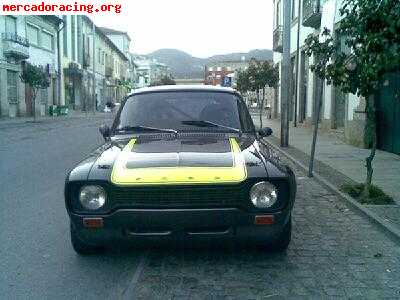
Well people, Rover 3500 V8 Vs. Ford Escort 1300L?

Xenon Camaro Modifications


Xenon Camaro Modifications
synergy green camaro

Escort WRC de Toño Villar.


Escort WRC de Toño Villar.
bamarti escort wrc

autos rolls royce 2011


autos rolls royce 2011

The Ford Ka has been going


The Ford Ka has been going
ford ka off road

Some Synergy Green Color


Some Synergy Green Color
synergy green camaro

2007 Sunflower Yellow NB


2007 Sunflower Yellow NB
yellow new beetle

Well people, Rover 3500 V8 Vs. Ford Escort 1300L?


Well people, Rover 3500 V8 Vs. Ford Escort 1300L?
mk 1 ford escort v8

80s-photo-journalism-video


80s-photo-journalism-video
80s photography

Ford Escort Mk1 Estate


Ford Escort Mk1 Estate
mk 1 ford escort v8

Abarth 595


Abarth 595
abarth 595

bmw emw 340


bmw emw 340
bmw emw 340

Panhard - Cars Rapides - Canvas Print (12x18)


Panhard - Cars Rapides - Canvas Print (12x18)
panhard cars

bamarti escort wrc


bamarti escort wrc
bamarti escort wrc

2011 Rolls-Royce Phantom 102EX


2011 Rolls-Royce Phantom 102EX
autos rolls royce 2011

Synergy Green exterior color


Synergy Green exterior color
synergy green camaro

06-bmw-pickup-official


06-bmw-pickup-official
bmw pickup

bmw emw 340


bmw emw 340
bmw emw 340

Stock Photo - 80s fashion


Stock Photo - 80s fashion
80s photography

2010 Synergy Green Camaro - 4


2010 Synergy Green Camaro - 4
synergy green camaro

2011 Rolls Royce Phantom


2011 Rolls Royce Phantom
autos rolls royce 2011

ford escort 1981


ford escort 1981
mk 1 ford escort v8

2011 porsche 911 speedster by
we covered little story
german teen ass fuck
Related Posts Plugin for WordPress, Blogger...