 Elegant Fiat Doblo Adventure With Gray and Silver Color
 Fiat Doblo Adventure On The Road
 Attractive Fiat Doblo Adventure
 Fiat Doblo Adventure Steering Wheels
 Duo Fiat Doblo Adventure
 Fiat Doblo Adventure Interior
 Fiat Doblo Adventure Inside ViewElegant Fiat Doblo Adventure With Gray and Silver ColorFiat Doblo Adventure On The RoadAttractive Fiat Doblo AdventureFiat Doblo Adventure Steering WheelsDuo Fiat Doblo AdventureFiat Doblo Adventure InteriorFiat Doblo Adventure Inside View


 The Fiat Sedici is a mini sport utility vehicle co-developed by Fiat and Suzuki mainly for the European market. It was introduced at the 2006 Geneva Motor Show, and is built at the Magyar Suzuki plant in Hungary. The expected production volume is 60,000 units per year, 1/3 of these to be sold by Fiat and 2/3 of these to be sold by Suzuki, where it is badged as the SX4. The design was created by Giorgetto Giugiaro's Italdesign Giugiaro studio, and it is an alternative to mini multi-purpose vehicles (MPV), which have a more "boxy" appearance. Introduced by Fiat in December 2005, it was the official car of the 2006 Winter Olympics. As the car is four wheel drive, it is considered a 4x4. As 4x4 is 16, the car is named Sedici, which means "sixteen" in Italian. By pressing a button the driver can change between 4x2 and 4x4 transmission modes. The car also has electronic stability control (ESC) on the options list and a diesel particulate filter (DPF) is a standard feature. In November 2006 it was the second best selling SUV in the Italian market, and by June 2007 it was the best selling vehicle. The front wheel drive version of the Sedici was unveiled in spring 2008. It was available with the same engine choices as the 4X4 version and was available in two trim levels: Dynamic and Emotion. The price, in Italy, was around 2000€ cheaper than the 4x4 version.There are two engines available: a 1.6 L Suzuki petrol and a 1.9 L Fiat turbodiesel.In spring 2009, the Sedici was given a more substantial upgrade: A changed front grille, similar to that of the Bravo, and a new bumper. Inside it has more sophisticated instrumentation, new fabrics, the air conditioning vents were changed, and it has new Euro 5-compliant engines. The 1.9 litre Multijet engine was replaced by the more modern 2.0 litre Multijet engine 135 PS (99 kW; 133 hp), also the petrol 1.6 litre engine was upgraded to have 120 PS (88 kW; 118 hp), with lower fuel consumption.
 Elegant Fiat Sedici
 Fiat Sedici Hatchback
 Fiat Sedici On The Road
 Active Fiat Sedici On Snow White
 Fiat Sedici Steering Wheels
 Fiat Sedici Seats View


 The Fiat Punto is a supermini produced by the Italian manufacturer, Fiat, since 1993.Internally codenamed Project 176, the Punto was announced in September 1993 and launched in late 1993 as a replacement for the ageing Fiat Uno. The Fiat Punto was voted European Car of the Year for 1995. The Punto's distinctive clean-cut styling by Giorgetto Giugiaro was an instant hit (though one of the car's most recognisable features, the vertical tail/rear lights, were not part of Giugiaro's original design and were in fact added later in-house at Fiat's factory[citation needed]). Competitive pricing which undercut rivals such as the Opel/Vauxhall Corsa and Volkswagen Polo also helped the Punto become an instant success in the European marketplace.Entry-level in the Punto range were the 1.1 and 1.2 L petrol engines and the 1.7 diesel engine. The 1.2 engine's actual capacity is 1.242 litres, available in 3 versions. The first, was fitted in the Punto ELX 75 and produced 75 hp (56 kW) at 6000 rpm while the second, fitted to Punto ELX 85 produced 86 hp (64 kW) at 6000 rpm. The third was a 60 hp (45 kW) engine which eventually replaced the 1.1 54 hp engine.A 1.6 Sporting was also available producing 88 bhp, but the best performing version was the 136 PS (100 kW; 134 hp) 1.4 GT using an evolution of the turbocharged 128 SOHC engine originally found in the Fiat Uno Turbo Mk II- capable of running over 200 km/h (120 mph) and reaching 100 km/h (62 mph) in just 7.9 seconds. This car was also fitted with a 5-speed manual gearbox, with different gear ratios than the ELX series. During the years the GT was made in three different "series" with power 136 PS (100 kW; 134 hp) (1993–1995),133 PS (98 kW; 131 hp) (1995–1997) and 130 PS (96 kW; 130 hp) (1997–1999).[Particular versions of the Mark I Punto were the Punto 6Speed, a 1.1 FIRE Punto 55 with a 6-speed gearbox, the Punto Selecta with a CVT-type automatic gearbox, and the Punto ED (Economical Drive), a 1.1 Punto whose 5-speed gearbox was designed for high fuel.
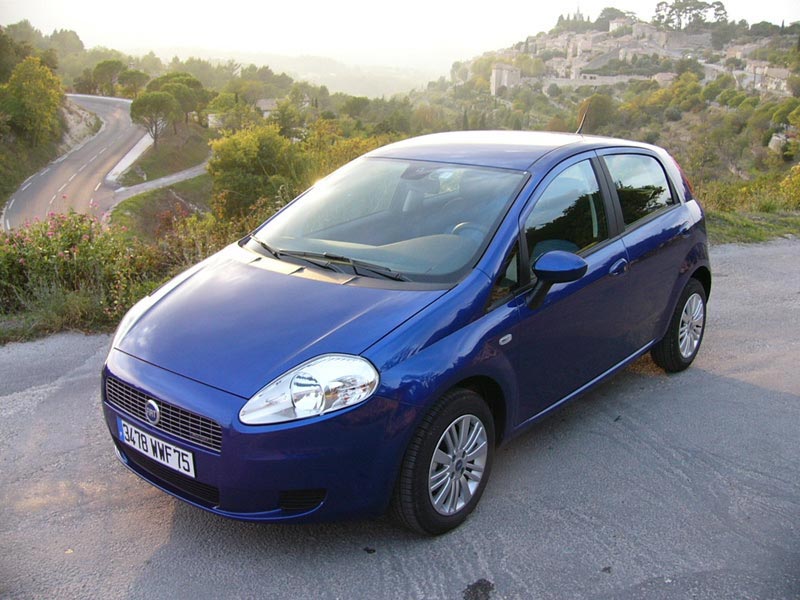 The second generation Nuova (New) Punto, codenamed Project 188, was launched in late 1999. The styling was all-new while retaining the original Punto's distinctive shape and design, while the chassis and interior were completely overhauled. The new Punto also became the first Fiat in decades to carry the original round Fiat badge, to celebrate Fiat's centenary.The 1.1 and 1.4 turbo engines were discontinued due to emissions issues, and the entry-level models had only a 1.2 petrol unit (with either 8 or 16 valves, giving 60 and 80 hp (60 kW) respectively) or a 1.9 diesel (with or without common-rail injection)Two sporty versions were offered. The 1.2 16 valve Sporting model with a 6-speed manual, and the hot 1.8 HGT which could reach almost 130 mph (210 km/h). The 1.2 16V model also has a CVT-equipped variant (with a sequential manual shift mode consisting of 6 gears, 7 for the Sporting model). The 1.8 HGT accelerates 0-60 in 8.0 seconds. It was considered a big improvement in handling over the Mark 1 GT. The HGT was also available (in limited numbers) as an "HGT Abarth" which added deeper bumpers, rear spoiler, side skirts, new alloy wheels and interior trim. The HGT Abarth had no technical improvements over the regular HGT.The second generation Punto has also adopted Dualdrive electric power steering and comes with two operation modes, using an electric motor, rather than a hydraulic pump driven by the engine. This results in reduced fuel consumption and less environmental impact. It has a fuel economy of 5.6 L/100 km (50 mpg-imp; 42 mpg-US) - urban and 3.9 L/100 km (72 mpg-imp; 60 mpg-US) - extra urban for the 1.9 diesel. The 1.8 petrol does 8.8 L/100 km (32 mpg-imp; 27 mpg-US) - urban and 5.3 L/100 km (53 mpg-imp; 44 mpg-US) - extra urban.
 In early 2003, Fiat celebrated the rollout of the 5,000,000th production Punto. In the same year, the second generation facelift brought further revisions to the platform, including extensive changes to the exterior styling and engines, partly due to changes in pedestrian safety regulations. The round Fiat badge, found only on the bonnet of second generation models, was introduced on the tailgate of the second generation facelift. On June 1, 2005, Fiat produced the 6,000,000th Punto at the Melfi plant. This Punto is currently the fourth-best selling supermini in Europe. Fiat Punto is now being produced in Italy and Serbia. Engine changes included a new 1.4 16v engine, alongside the staple 1.2 & 1.2 16v variants, and the introduction of two HGT versions, 1.9 L Multijet diesel , and 1.8 L 16v petrol engine which could reach almost 130 mph (210 km/h) continued over from the Mark 2. There was an introduction also of the 1.3 L common rail diesel MultiJet engine.Despite the launch of the slightly larger Grande Punto in 2005, the 1999 Punto is still in production, and was launched for the first time in Chile in 2007, as Punto Classic. It is to be replaced by a new B segment model. In October 2005, Serbian manufacturer Zastava reached an agreement with Fiat to make this version under licence with the model name Zastava 10. After acquiring Zastava in autumn 2008, Fiat continued production of this vehicle under the brandname Fiat Punto Classic in March, 2009. The fully new Grande Punto codenamed Project 199, was unveiled at the 2005 Frankfurt Motor Show and went on sale later on that year. Again styled by Giugiaro, the car is using the Fiat/GM SCCS platform. In 2009 the Grande Punto was re-named Punto Evo and given some minor styling tweaks including a new front and revised rear lights. It also received a new interior.
 The Fiat Punto is a supermini produced by the Italian manufacturer, Fiat, since 1993.Internally codenamed Project 176, the Punto was announced in September 1993 and launched in late 1993 as a replacement for the ageing Fiat Uno. The Fiat Punto was voted European Car of the Year for 1995. The Punto's distinctive clean-cut styling by Giorgetto Giugiaro was an instant hit (though one of the car's most recognisable features, the vertical tail/rear lights, were not part of Giugiaro's original design and were in fact added later in-house at Fiat's factory[citation needed]). Competitive pricing which undercut rivals such as the Opel/Vauxhall Corsa and Volkswagen Polo also helped the Punto become an instant success in the European marketplace.Entry-level in the Punto range were the 1.1 and 1.2 L petrol engines and the 1.7 diesel engine. The 1.2 engine's actual capacity is 1.242 litres, available in 3 versions. The first, was fitted in the Punto ELX 75 and produced 75 hp (56 kW) at 6000 rpm while the second, fitted to Punto ELX 85 produced 86 hp (64 kW) at 6000 rpm. The third was a 60 hp (45 kW) engine which eventually replaced the 1.1 54 hp engine.A 1.6 Sporting was also available producing 88 bhp, but the best performing version was the 136 PS (100 kW; 134 hp) 1.4 GT using an evolution of the turbocharged 128 SOHC engine originally found in the Fiat Uno Turbo Mk II- capable of running over 200 km/h (120 mph) and reaching 100 km/h (62 mph) in just 7.9 seconds. This car was also fitted with a 5-speed manual gearbox, with different gear ratios than the ELX series. During the years the GT was made in three different "series" with power 136 PS (100 kW; 134 hp) (1993–1995),133 PS (98 kW; 131 hp) (1995–1997) and 130 PS (96 kW; 130 hp) (1997–1999).[Particular versions of the Mark I Punto were the Punto 6Speed, a 1.1 FIRE Punto 55 with a 6-speed gearbox, the Punto Selecta with a CVT-type automatic gearbox, and the Punto ED (Economical Drive), a 1.1 Punto whose 5-speed gearbox was designed for high fuel.
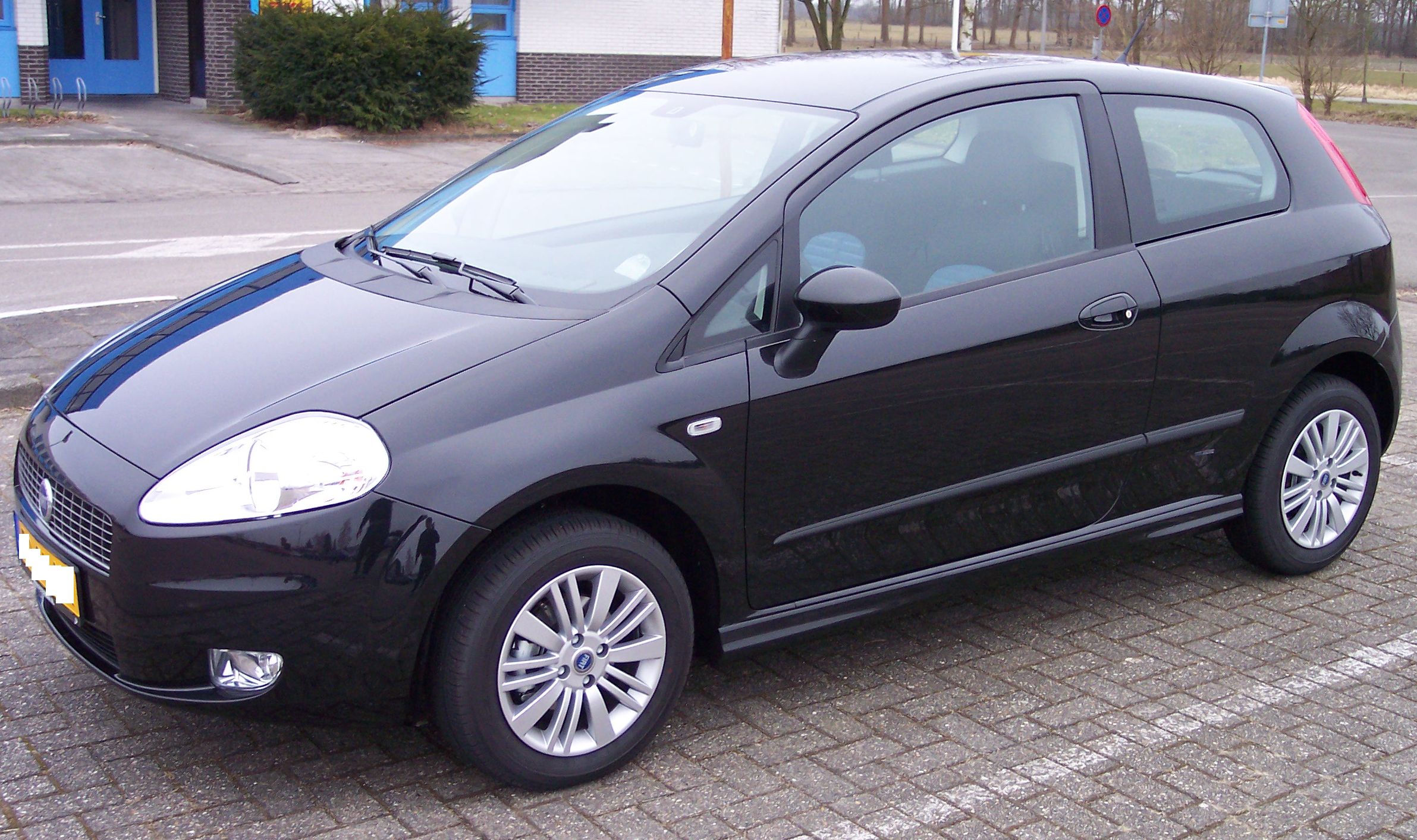 The second generation Nuova (New) Punto, codenamed Project 188, was launched in late 1999. The styling was all-new while retaining the original Punto's distinctive shape and design, while the chassis and interior were completely overhauled. The new Punto also became the first Fiat in decades to carry the original round Fiat badge, to celebrate Fiat's centenary.The 1.1 and 1.4 turbo engines were discontinued due to emissions issues, and the entry-level models had only a 1.2 petrol unit (with either 8 or 16 valves, giving 60 and 80 hp (60 kW) respectively) or a 1.9 diesel (with or without common-rail injection)Two sporty versions were offered. The 1.2 16 valve Sporting model with a 6-speed manual, and the hot 1.8 HGT which could reach almost 130 mph (210 km/h). The 1.2 16V model also has a CVT-equipped variant (with a sequential manual shift mode consisting of 6 gears, 7 for the Sporting model). The 1.8 HGT accelerates 0-60 in 8.0 seconds. It was considered a big improvement in handling over the Mark 1 GT. The HGT was also available (in limited numbers) as an "HGT Abarth" which added deeper bumpers, rear spoiler, side skirts, new alloy wheels and interior trim. The HGT Abarth had no technical improvements over the regular HGT.The second generation Punto has also adopted Dualdrive electric power steering and comes with two operation modes, using an electric motor, rather than a hydraulic pump driven by the engine. This results in reduced fuel consumption and less environmental impact. It has a fuel economy of 5.6 L/100 km (50 mpg-imp; 42 mpg-US) - urban and 3.9 L/100 km (72 mpg-imp; 60 mpg-US) - extra urban for the 1.9 diesel. The 1.8 petrol does 8.8 L/100 km (32 mpg-imp; 27 mpg-US) - urban and 5.3 L/100 km (53 mpg-imp; 44 mpg-US) - extra urban.
 In early 2003, Fiat celebrated the rollout of the 5,000,000th production Punto. In the same year, the second generation facelift brought further revisions to the platform, including extensive changes to the exterior styling and engines, partly due to changes in pedestrian safety regulations. The round Fiat badge, found only on the bonnet of second generation models, was introduced on the tailgate of the second generation facelift. On June 1, 2005, Fiat produced the 6,000,000th Punto at the Melfi plant. This Punto is currently the fourth-best selling supermini in Europe. Fiat Punto is now being produced in Italy and Serbia. Engine changes included a new 1.4 16v engine, alongside the staple 1.2 & 1.2 16v variants, and the introduction of two HGT versions, 1.9 L Multijet diesel , and 1.8 L 16v petrol engine which could reach almost 130 mph (210 km/h) continued over from the Mark 2. There was an introduction also of the 1.3 L common rail diesel MultiJet engine.Despite the launch of the slightly larger Grande Punto in 2005, the 1999 Punto is still in production, and was launched for the first time in Chile in 2007, as Punto Classic. It is to be replaced by a new B segment model. In October 2005, Serbian manufacturer Zastava reached an agreement with Fiat to make this version under licence with the model name Zastava 10. After acquiring Zastava in autumn 2008, Fiat continued production of this vehicle under the brandname Fiat Punto Classic in March, 2009. The fully new Grande Punto codenamed Project 199, was unveiled at the 2005 Frankfurt Motor Show and went on sale later on that year. Again styled by Giugiaro, the car is using the Fiat/GM SCCS platform. In 2009 the Grande Punto was re-named Punto Evo and given some minor styling tweaks including a new front and revised rear lights. It also received a new interior.


 1938 Alfa 8C 2900B Le Mans
 Those are incredibly good looking Jaguars
 On of the most remarkable and well designed instrument gauge clusters I've ever seen
 Fiat 1400b junior Ghia
 Awesome use of a hoodscoop to make an ugly car better looking
 read about it if you like, very dry, dull, and biographical view of how and why he was there http://forix.autosport.com/8w/targa.html
 The Fiat 500 is a car produced by the Fiat company of Italy between 1957 and 1975, with limited production of the Fiat 500 K estate continuing until 1977. The car was designed by Dante Giacosa. Launched as the Nuova (new) 500 in July 1957, it was marketed as a cheap and practical town car. Measuring only 3 metres (~10 feet) long, and originally powered by a tiny 479 cc two-cylinder, air-cooled engine, the 500 redefined the term "small car" and is considered one of the first city cars. In 2007 Fiat launched a similar styled, longer and heavier front wheel drive car, the Fiat Nuova 500. To meet the demands of the post-war market which called for economy cars, the Fiat 500 was rear-engined on the pattern of the Volkswagen Beetle, just like its bigger brother, the 1955 Fiat 600. Several car makers followed the now uncommon rear engine configuration at the time and were quite successful. The Neckar version manufactured in Heilbronn under a complicated deal involving NSU, was introduced in October 1961. In Upper Austria the firm of Steyr-Puch also produced cars based, by agreement, on the Fiat 500. Despite its diminutive size, the 500 proved to be an enormously practical and popular vehicle throughout Europe. Besides the two-door coupé, it was also available as the "Giardiniera" station wagon; this variant featured the standard engine laid on its side, the wheelbase lengthened by 10 cm (4 in) which yielded a usable rear seat, a full-length sunroof, and larger brakes from the Fiat 600. Sports models were famously produced by Abarth, as well as by Giannini. An Austrian variant, produced by Steyr-Daimler-Puch, the 1957–1969 Steyr-Puch 500, had a motorcycle-derived Puch boxer twin motor, a sports model of which was the 1964–1968 Steyr-Puch 650 TR2. Production of the 500 ended in 1975, although its replacement, the Fiat 126, was launched two years earlier. The 126 was never as popular as its predecessor in Italy, but was (and still is) enormously popular in the former Eastern Bloc countries, where it is famed for its mechanical durability and high fuel economy.
 The 'original' new 500, the Nuova, has a smaller two-cylinder engine than all newer models, at 479 cc (500cc nominal), hence the name, and producing just 13 bhp. This model also features a fabric roof folding all the way back to the rear of the vehicle, like that of a Citroën 2CV rather than the later roof design, which only folds half way back along the roof. The Nuova is one of three models featuring "suicide doors". There is also a stylish Sport version of the Nuova, which features a distinctive red stripe and a more powerful engine, bored out to 499.5 cc from the original 479 cc engine, thus producing an impressive 21 bhp from the same original block.Replacing the original Nuova in 1960, the D looks very similar to the Nuova, but there are two key differences. One is the engine size (the D features an uprated 499 cc engine producing 17 bhp as standard—this engine is used right through until the end of the L in 1973) and the other is the roof: the standard D roof does not fold back as far as the roof on the Nuova, though it was also available as the "Transformable" with the same roof as the Nuova. The D also features "suicide doors".The estate version of the Fiat 500 is the longest running model. The engine is laid under the floor of the boot to create a flat loading surface. The roof on this model also stretches all the way to the rear, not stopping above the driver and front passenger as it does in other models of the same period. The K also features "suicide doors" and is the only model to continue to sport this door type in to the 1970s.The F spans two periods of 500 production, the D and the L. As such, it is the most frequently misidentified model. Between 1965 and 1969 the F carried the same badging as the D, but the two models are distinguishable by the positioning of their door hinges. The D has "suicide doors": the F, produced from June 1965, at last featured front-hinged doors. Between 1969 and 1972 the F was sold alongside the Lusso model as a cheaper "base model" alternative. While the F and L are mechanically very similar, the key differences are the bumpers (the L has an extra chrome nudge bar) and the interior (the F interior is nearly identical to the original 1957 design while the L sports a much more modern look).The penultimate model, the main change for the L is a much modernized interior (including a renewed dashboard) which brought the Fiat 500 up to date. Greater comfort and style were provided in this new model for the new generation.The last incarnation of the Fiat 500 was the R model. It had a larger 594 cc engine, designed by Abarth, giving it a more usable power rating of 23 bhp, came with a syncromesh gearbox. The floor-pan which was from either the 'L', or later, the new 126. It was also more comfortable, but more simply trimmed and equipped than before — the fuel gauge was omitted and only the low fuel indicator remained. The 500 R was also a stop-gap for Fiat prior to the launch of the Fiat 126, and when the new 126 was launched, sales of the old Fiat 500 R plummeted. It sold alongside the Fiat 126 for another two years before Fiat retired the 500.

 Carrozzeria Ghia made a custom "Jolly" version of the 500 inspired by the limited edition Fiat 600 Jolly. Fiat previewed the all new 500 in March 2007—exactly 50 years after the first Fiat 500 was presented. The design of the new 2007 Fiat 500 is based on the 2004 Fiat Trepiuno concept. This car features a distinctive retro-look just like the Volkswagen New Beetle and BMW MINI but is substantially cheaper than those cars, with a starting price of €10,500 (similar to how the original Fiat 500 was cheaper than the Volkswagen Beetle and Austin Mini). Fiat shares the underpinnings of the new 500 with Ford for the 2009 Ford Ka. Production takes place in Fiat facilities in Tychy, Poland, and was scheduled for mid 2007, with commercial debut in September 2007. The Nuova 500 was introduced in Mexico in September 2008, powered the 1.4 L 16V 100 PS (74 kW; 99 hp) engine, transmissions are dualogic for the 500 Classic, 500 Lounge and 500 Vintage trims or six-speed manual gearbox for the 500 Sport Trim. The Abarth 500, Abarth 500 esseesse, Abarth 500C and the Abarth 695 Tributo Ferrari variants have been sold through independent importers. Mexico became the first country in the Americas in which the Nuova 500 is sold. In 1995 British shoegazing band Lush recorded a tribute song to Fiat 500. The song, aptly named 500, was released on the group's final album Lovelife in 1996. A remixed version of the song, renamed 500 (Shake Baby Shake), was released as the groups final single later that year, reaching #21 in the UK singles chart. Free diving world champion Enzo Molinari and his brother Roberto drive a beaten-up Fiat 500 with a trailer full of diving equipment in the movie The Big Blue. Both actors and the car later featured in Japanese TV commercials for 'Lazer 100' gasoline. In The Castle of Cagliostro, a Japanese animated film starring the master thief Arsène Lupin III, he and his close friend Daisuke Jigen escape on a Fiat 500 pursuit after robbing the casino of Monaco. The car is also seen frequently in other animated iterations of the franchise, including the 1971-72 television series and the 2008 special Red Vs Green. In the 2006 animated movie Cars, produced by Pixar and populated by anthropomorphic motor vehicles, the automotive character of Luigi is a 1959 Fiat 500.
The Fiat 500 is a car produced by the Fiat company of Italy between 1957 and 1975, with limited production of the Fiat 500 K estate continuing until 1977. The car was designed by Dante Giacosa. Launched as the Nuova (new) 500 in July 1957, it was marketed as a cheap and practical town car. Measuring only 3 metres (~10 feet) long, and originally powered by a tiny 479 cc two-cylinder, air-cooled engine, the 500 redefined the term "small car" and is considered one of the first city cars. In 2007 Fiat launched a similar styled, longer and heavier front wheel drive car, the Fiat Nuova 500. To meet the demands of the post-war market which called for economy cars, the Fiat 500 was rear-engined on the pattern of the Volkswagen Beetle, just like its bigger brother, the 1955 Fiat 600. Several car makers followed the now uncommon rear engine configuration at the time and were quite successful. The Neckar version manufactured in Heilbronn under a complicated deal involving NSU, was introduced in October 1961. In Upper Austria the firm of Steyr-Puch also produced cars based, by agreement, on the Fiat 500. Despite its diminutive size, the 500 proved to be an enormously practical and popular vehicle throughout Europe. Besides the two-door coupé, it was also available as the "Giardiniera" station wagon; this variant featured the standard engine laid on its side, the wheelbase lengthened by 10 cm (4 in) which yielded a usable rear seat, a full-length sunroof, and larger brakes from the Fiat 600. Sports models were famously produced by Abarth, as well as by Giannini. An Austrian variant, produced by Steyr-Daimler-Puch, the 1957–1969 Steyr-Puch 500, had a motorcycle-derived Puch boxer twin motor, a sports model of which was the 1964–1968 Steyr-Puch 650 TR2. Production of the 500 ended in 1975, although its replacement, the Fiat 126, was launched two years earlier. The 126 was never as popular as its predecessor in Italy, but was (and still is) enormously popular in the former Eastern Bloc countries, where it is famed for its mechanical durability and high fuel economy.The 'original' new 500, the Nuova, has a smaller two-cylinder engine than all newer models, at 479 cc (500cc nominal), hence the name, and producing just 13 bhp. This model also features a fabric roof folding all the way back to the rear of the vehicle, like that of a Citroën 2CV rather than the later roof design, which only folds half way back along the roof. The Nuova is one of three models featuring "suicide doors". There is also a stylish Sport version of the Nuova, which features a distinctive red stripe and a more powerful engine, bored out to 499.5 cc from the original 479 cc engine, thus producing an impressive 21 bhp from the same original block.Replacing the original Nuova in 1960, the D looks very similar to the Nuova, but there are two key differences. One is the engine size (the D features an uprated 499 cc engine producing 17 bhp as standard—this engine is used right through until the end of the L in 1973) and the other is the roof: the standard D roof does not fold back as far as the roof on the Nuova, though it was also available as the "Transformable" with the same roof as the Nuova. The D also features "suicide doors".The estate version of the Fiat 500 is the longest running model. The engine is laid under the floor of the boot to create a flat loading surface. The roof on this model also stretches all the way to the rear, not stopping above the driver and front passenger as it does in other models of the same period. The K also features "suicide doors" and is the only model to continue to sport this door type in to the 1970s.The F spans two periods of 500 production, the D and the L. As such, it is the most frequently misidentified model. Between 1965 and 1969 the F carried the same badging as the D, but the two models are distinguishable by the positioning of their door hinges. The D has "suicide doors": the F, produced from June 1965, at last featured front-hinged doors. Between 1969 and 1972 the F was sold alongside the Lusso model as a cheaper "base model" alternative. While the F and L are mechanically very similar, the key differences are the bumpers (the L has an extra chrome nudge bar) and the interior (the F interior is nearly identical to the original 1957 design while the L sports a much more modern look).The penultimate model, the main change for the L is a much modernized interior (including a renewed dashboard) which brought the Fiat 500 up to date. Greater comfort and style were provided in this new model for the new generation.The last incarnation of the Fiat 500 was the R model. It had a larger 594 cc engine, designed by Abarth, giving it a more usable power rating of 23 bhp, came with a syncromesh gearbox. The floor-pan which was from either the 'L', or later, the new 126. It was also more comfortable, but more simply trimmed and equipped than before — the fuel gauge was omitted and only the low fuel indicator remained. The 500 R was also a stop-gap for Fiat prior to the launch of the Fiat 126, and when the new 126 was launched, sales of the old Fiat 500 R plummeted. It sold alongside the Fiat 126 for another two years before Fiat retired the 500.Carrozzeria Ghia made a custom "Jolly" version of the 500 inspired by the limited edition Fiat 600 Jolly. Fiat previewed the all new 500 in March 2007—exactly 50 years after the first Fiat 500 was presented. The design of the new 2007 Fiat 500 is based on the 2004 Fiat Trepiuno concept. This car features a distinctive retro-look just like the Volkswagen New Beetle and BMW MINI but is substantially cheaper than those cars, with a starting price of €10,500 (similar to how the original Fiat 500 was cheaper than the Volkswagen Beetle and Austin Mini). Fiat shares the underpinnings of the new 500 with Ford for the 2009 Ford Ka. Production takes place in Fiat facilities in Tychy, Poland, and was scheduled for mid 2007, with commercial debut in September 2007. The Nuova 500 was introduced in Mexico in September 2008, powered the 1.4 L 16V 100 PS (74 kW; 99 hp) engine, transmissions are dualogic for the 500 Classic, 500 Lounge and 500 Vintage trims or six-speed manual gearbox for the 500 Sport Trim. The Abarth 500, Abarth 500 esseesse, Abarth 500C and the Abarth 695 Tributo Ferrari variants have been sold through independent importers. Mexico became the first country in the Americas in which the Nuova 500 is sold. In 1995 British shoegazing band Lush recorded a tribute song to Fiat 500. The song, aptly named 500, was released on the group's final album Lovelife in 1996. A remixed version of the song, renamed 500 (Shake Baby Shake), was released as the groups final single later that year, reaching #21 in the UK singles chart. Free diving world champion Enzo Molinari and his brother Roberto drive a beaten-up Fiat 500 with a trailer full of diving equipment in the movie The Big Blue. Both actors and the car later featured in Japanese TV commercials for 'Lazer 100' gasoline. In The Castle of Cagliostro, a Japanese animated film starring the master thief Arsène Lupin III, he and his close friend Daisuke Jigen escape on a Fiat 500 pursuit after robbing the casino of Monaco. The car is also seen frequently in other animated iterations of the franchise, including the 1971-72 television series and the 2008 special Red Vs Green. In the 2006 animated movie Cars, produced by Pixar and populated by anthropomorphic motor vehicles, the automotive character of Luigi is a 1959 Fiat 500.
Carrozzeria Ghia made a custom "Jolly" version of the 500 inspired by the limited edition Fiat 600 Jolly. Fiat previewed the all new 500 in March 2007—exactly 50 years after the first Fiat 500 was presented. The design of the new 2007 Fiat 500 is based on the 2004 Fiat Trepiuno concept. This car features a distinctive retro-look just like the Volkswagen New Beetle and BMW MINI but is substantially cheaper than those cars, with a starting price of €10,500 (similar to how the original Fiat 500 was cheaper than the Volkswagen Beetle and Austin Mini). Fiat shares the underpinnings of the new 500 with Ford for the 2009 Ford Ka. Production takes place in Fiat facilities in Tychy, Poland, and was scheduled for mid 2007, with commercial debut in September 2007. The Nuova 500 was introduced in Mexico in September 2008, powered the 1.4 L 16V 100 PS (74 kW; 99 hp) engine, transmissions are dualogic for the 500 Classic, 500 Lounge and 500 Vintage trims or six-speed manual gearbox for the 500 Sport Trim. The Abarth 500, Abarth 500 esseesse, Abarth 500C and the Abarth 695 Tributo Ferrari variants have been sold through independent importers. Mexico became the first country in the Americas in which the Nuova 500 is sold. In 1995 British shoegazing band Lush recorded a tribute song to Fiat 500. The song, aptly named 500, was released on the group's final album Lovelife in 1996. A remixed version of the song, renamed 500 (Shake Baby Shake), was released as the groups final single later that year, reaching #21 in the UK singles chart. Free diving world champion Enzo Molinari and his brother Roberto drive a beaten-up Fiat 500 with a trailer full of diving equipment in the movie The Big Blue. Both actors and the car later featured in Japanese TV commercials for 'Lazer 100' gasoline. In The Castle of Cagliostro, a Japanese animated film starring the master thief Arsène Lupin III, he and his close friend Daisuke Jigen escape on a Fiat 500 pursuit after robbing the casino of Monaco. The car is also seen frequently in other animated iterations of the franchise, including the 1971-72 television series and the 2008 special Red Vs Green. In the 2006 animated movie Cars, produced by Pixar and populated by anthropomorphic motor vehicles, the automotive character of Luigi is a 1959 Fiat 500.
The Fiat 500 is a car produced by the Fiat company of Italy between 1957 and 1975, with limited production of the Fiat 500 K estate continuing until 1977. The car was designed by Dante Giacosa. Launched as the Nuova (new) 500 in July 1957, it was marketed as a cheap and practical town car. Measuring only 3 metres (~10 feet) long, and originally powered by a tiny 479 cc two-cylinder, air-cooled engine, the 500 redefined the term "small car" and is considered one of the first city cars. In 2007 Fiat launched a similar styled, longer and heavier front wheel drive car, the Fiat Nuova 500. To meet the demands of the post-war market which called for economy cars, the Fiat 500 was rear-engined on the pattern of the Volkswagen Beetle, just like its bigger brother, the 1955 Fiat 600. Several car makers followed the now uncommon rear engine configuration at the time and were quite successful. The Neckar version manufactured in Heilbronn under a complicated deal involving NSU, was introduced in October 1961. In Upper Austria the firm of Steyr-Puch also produced cars based, by agreement, on the Fiat 500. Despite its diminutive size, the 500 proved to be an enormously practical and popular vehicle throughout Europe. Besides the two-door coupé, it was also available as the "Giardiniera" station wagon; this variant featured the standard engine laid on its side, the wheelbase lengthened by 10 cm (4 in) which yielded a usable rear seat, a full-length sunroof, and larger brakes from the Fiat 600. Sports models were famously produced by Abarth, as well as by Giannini. An Austrian variant, produced by Steyr-Daimler-Puch, the 1957–1969 Steyr-Puch 500, had a motorcycle-derived Puch boxer twin motor, a sports model of which was the 1964–1968 Steyr-Puch 650 TR2. Production of the 500 ended in 1975, although its replacement, the Fiat 126, was launched two years earlier. The 126 was never as popular as its predecessor in Italy, but was (and still is) enormously popular in the former Eastern Bloc countries, where it is famed for its mechanical durability and high fuel economy.The 'original' new 500, the Nuova, has a smaller two-cylinder engine than all newer models, at 479 cc (500cc nominal), hence the name, and producing just 13 bhp. This model also features a fabric roof folding all the way back to the rear of the vehicle, like that of a Citroën 2CV rather than the later roof design, which only folds half way back along the roof. The Nuova is one of three models featuring "suicide doors". There is also a stylish Sport version of the Nuova, which features a distinctive red stripe and a more powerful engine, bored out to 499.5 cc from the original 479 cc engine, thus producing an impressive 21 bhp from the same original block.Replacing the original Nuova in 1960, the D looks very similar to the Nuova, but there are two key differences. One is the engine size (the D features an uprated 499 cc engine producing 17 bhp as standard—this engine is used right through until the end of the L in 1973) and the other is the roof: the standard D roof does not fold back as far as the roof on the Nuova, though it was also available as the "Transformable" with the same roof as the Nuova. The D also features "suicide doors".The estate version of the Fiat 500 is the longest running model. The engine is laid under the floor of the boot to create a flat loading surface. The roof on this model also stretches all the way to the rear, not stopping above the driver and front passenger as it does in other models of the same period. The K also features "suicide doors" and is the only model to continue to sport this door type in to the 1970s.The F spans two periods of 500 production, the D and the L. As such, it is the most frequently misidentified model. Between 1965 and 1969 the F carried the same badging as the D, but the two models are distinguishable by the positioning of their door hinges. The D has "suicide doors": the F, produced from June 1965, at last featured front-hinged doors. Between 1969 and 1972 the F was sold alongside the Lusso model as a cheaper "base model" alternative. While the F and L are mechanically very similar, the key differences are the bumpers (the L has an extra chrome nudge bar) and the interior (the F interior is nearly identical to the original 1957 design while the L sports a much more modern look).The penultimate model, the main change for the L is a much modernized interior (including a renewed dashboard) which brought the Fiat 500 up to date. Greater comfort and style were provided in this new model for the new generation.The last incarnation of the Fiat 500 was the R model. It had a larger 594 cc engine, designed by Abarth, giving it a more usable power rating of 23 bhp, came with a syncromesh gearbox. The floor-pan which was from either the 'L', or later, the new 126. It was also more comfortable, but more simply trimmed and equipped than before — the fuel gauge was omitted and only the low fuel indicator remained. The 500 R was also a stop-gap for Fiat prior to the launch of the Fiat 126, and when the new 126 was launched, sales of the old Fiat 500 R plummeted. It sold alongside the Fiat 126 for another two years before Fiat retired the 500.Carrozzeria Ghia made a custom "Jolly" version of the 500 inspired by the limited edition Fiat 600 Jolly. Fiat previewed the all new 500 in March 2007—exactly 50 years after the first Fiat 500 was presented. The design of the new 2007 Fiat 500 is based on the 2004 Fiat Trepiuno concept. This car features a distinctive retro-look just like the Volkswagen New Beetle and BMW MINI but is substantially cheaper than those cars, with a starting price of €10,500 (similar to how the original Fiat 500 was cheaper than the Volkswagen Beetle and Austin Mini). Fiat shares the underpinnings of the new 500 with Ford for the 2009 Ford Ka. Production takes place in Fiat facilities in Tychy, Poland, and was scheduled for mid 2007, with commercial debut in September 2007. The Nuova 500 was introduced in Mexico in September 2008, powered the 1.4 L 16V 100 PS (74 kW; 99 hp) engine, transmissions are dualogic for the 500 Classic, 500 Lounge and 500 Vintage trims or six-speed manual gearbox for the 500 Sport Trim. The Abarth 500, Abarth 500 esseesse, Abarth 500C and the Abarth 695 Tributo Ferrari variants have been sold through independent importers. Mexico became the first country in the Americas in which the Nuova 500 is sold. In 1995 British shoegazing band Lush recorded a tribute song to Fiat 500. The song, aptly named 500, was released on the group's final album Lovelife in 1996. A remixed version of the song, renamed 500 (Shake Baby Shake), was released as the groups final single later that year, reaching #21 in the UK singles chart. Free diving world champion Enzo Molinari and his brother Roberto drive a beaten-up Fiat 500 with a trailer full of diving equipment in the movie The Big Blue. Both actors and the car later featured in Japanese TV commercials for 'Lazer 100' gasoline. In The Castle of Cagliostro, a Japanese animated film starring the master thief Arsène Lupin III, he and his close friend Daisuke Jigen escape on a Fiat 500 pursuit after robbing the casino of Monaco. The car is also seen frequently in other animated iterations of the franchise, including the 1971-72 television series and the 2008 special Red Vs Green. In the 2006 animated movie Cars, produced by Pixar and populated by anthropomorphic motor vehicles, the automotive character of Luigi is a 1959 Fiat 500.

